Get Your Personalised Supplement Plan
Built by our in-house nutritionist to match your goals and lifestyle. Takes just 60 seconds.
Find My Super FoodsBuilt by our in-house nutritionist to match your goals and lifestyle. Takes just 60 seconds.
Find My Super Foods
Forest Super Foods
Moringa Content Hub
Nine consumer-facing articles covering moringa nutrition, traditional use, product quality, safety, sourcing and processing.
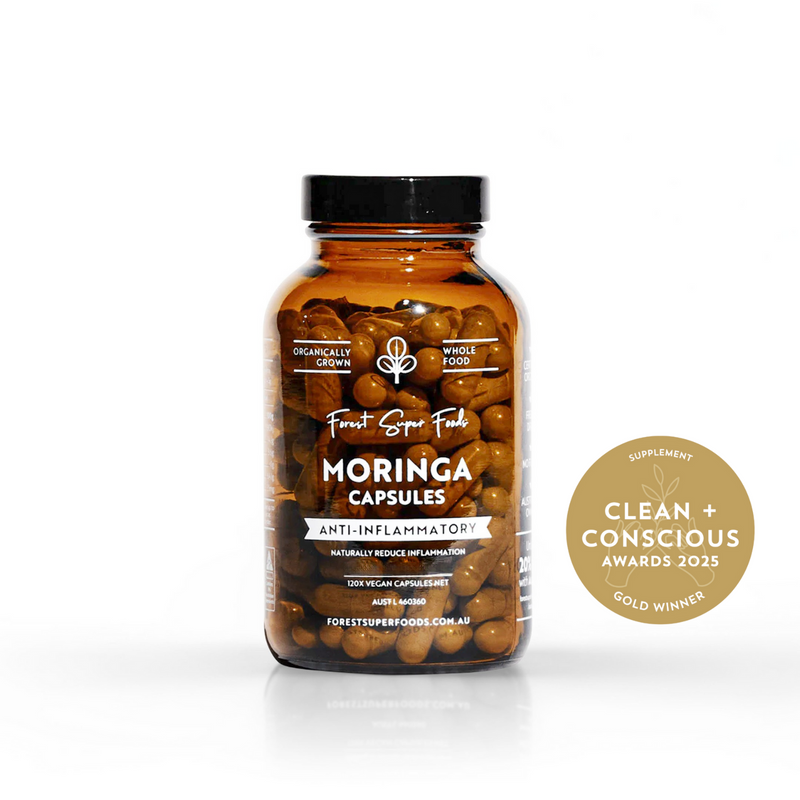
Forest Super Foods Moringa Capsules are a TGA-listed medicine (AUST L 460360). Each capsule contains 500 mg of whole Moringa oleifera leaf powder. Always read the label and follow the directions for use.


Use the guides below to go straight to the topic you need. Every article stays within the listed indications for Forest Super Foods Moringa.
1. Complete guide
What moringa is, nutrients, traditional use, safety, quality and Australian regulation.
2. What is moringa?
The tree, common names, plant parts, and how it differs from a greens powder.
3. Nutrition profile
More than 90 nutritional components, batch testing, and what a 500 mg capsule actually delivers.
4. What the evidence says
Listed antioxidant activity and traditional Ayurvedic use to help relieve inflammation.
5. Moringa vs other greens
How moringa compares with spirulina, wheatgrass and matcha.
6. How to take it safely
Dose, timing, missed doses and why the bottle label is the source of truth.
7. Side effects and safety
Who should not take it, medicine interactions and when to stop.
8. History and traditional use
Indian origin, Ayurveda, food use overseas, and why Australia treats it as a medicine.
9. Grown, harvested, processed
Erode sourcing, freeze-drying, milling, testing and Australian encapsulation.



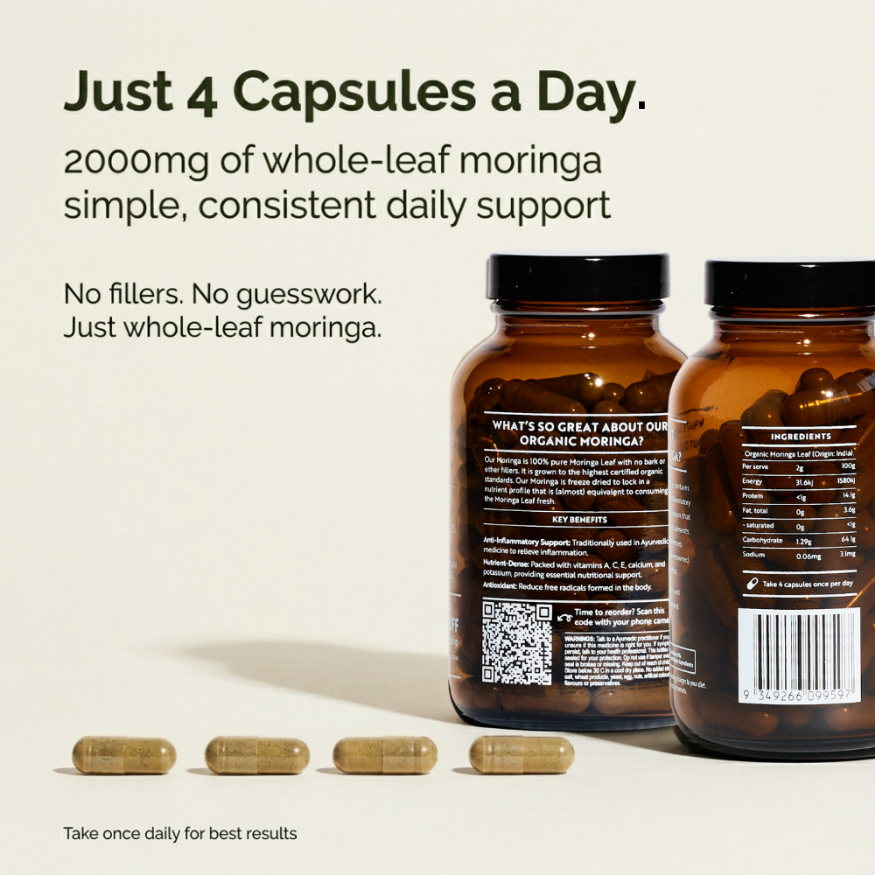
Calm Inflammation. Move Freely.
The Complete Guide to Moringa
Moringa usually refers to Moringa oleifera, a fast-growing leafy tree native to the Indian subcontinent. It is now cultivated throughout many warm tropical and subtropical regions and is sometimes known as the drumstick tree because of its long, slender seed pods.
Different parts of the moringa tree have been used traditionally, including the leaves, pods and seeds. Forest Super Foods uses the leaf only. The leaves are freeze-dried, finely milled and encapsulated as a whole-leaf powder rather than being supplied as an isolated extract.
Where does moringa come from? Moringa oleifera originated in the Indian subcontinent and has travelled widely through cultivation. It grows best in warm conditions with plenty of sunlight and well-drained soil, and established trees are well adapted to periods of dry weather. Forest Super Foods currently sources its moringa leaf from Erode, Tamil Nadu, India, an agricultural region in the south of the country.
Which part of the tree is used? Moringa products can be made from different parts of the plant, so the label matters. Forest Super Foods Moringa Capsules contain 500 mg of Moringa oleifera leaf powder per capsule in a plant-based hypromellose capsule. Leaves, seeds, roots, bark and pods are not nutritionally or chemically identical. When comparing moringa products, look for both the botanical name and the plant part.
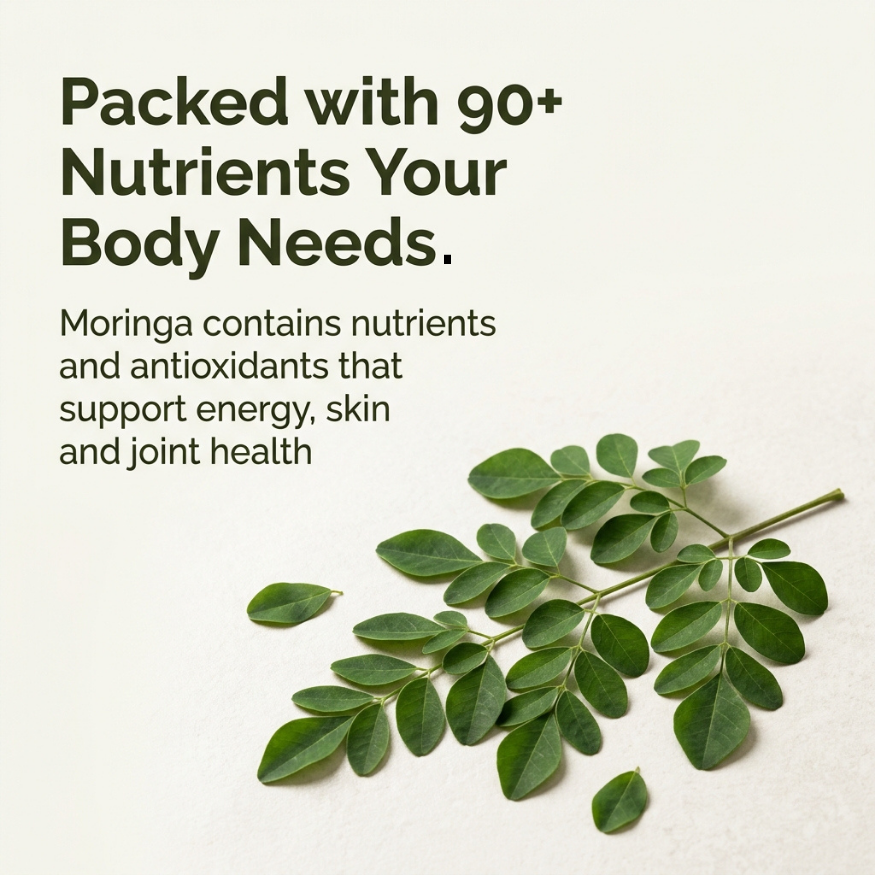
What nutrients are in the leaf? Moringa leaf has an unusually broad nutritional profile. Across Moringa oleifera, researchers have described more than 90 nutritional chemical components, including proteins, lipids, carbohydrates, dietary fibre, vitamins, minerals, amino acids and naturally occurring plant compounds. At least 19 different amino acids, including essential and non-essential amino acids, have also been identified. The exact profile of the leaf can vary with growing conditions, harvest, processing and storage.
This diversity is one of the reasons moringa leaf is nutritionally interesting. Importantly, “more than 90” refers to nutritional chemical components identified across Moringa oleifera rather than a claim that every capsule provides 90 nutrients in a nutritionally significant amount. Individual nutrient levels naturally vary from plant to plant and batch to batch.
Sources: Peñalver et al., Foods (2022), PMID 35454694; Pareek et al., Int J Mol Sci (2023), PMC9916933; Nutrients (2024), PMC11479159; Sokhela et al., Nutrients (2023), PMID 37111230.
What does the evidence say? Forest Super Foods Moringa Capsules are a TGA-listed medicine with two relevant indications. Moringa has antioxidant activity and helps reduce free radicals formed in the body. It is also traditionally used in Ayurvedic medicine to help relieve inflammation. Those two statements are the most useful way to understand the product. They describe what the listed medicine is intended to do without turning moringa into a cure-all.
Traditional use. Moringa has a long history within South Asian food traditions and traditional systems of medicine. Ayurveda, the traditional medical system originating in India, includes moringa among the botanicals used in practice. For Forest Super Foods Moringa, the relevant traditional indication is that it is traditionally used in Ayurvedic medicine to help relieve inflammation.
How should Australians take moringa? In Australia, Forest Super Foods Moringa is supplied as a TGA-listed medicine. Take it according to the directions on the current bottle label and do not exceed the labelled amount. Each capsule contains 500 mg of Moringa oleifera leaf powder. Always read the label and follow the directions for use.
Is moringa safe for everyone? Moringa is not suitable for everyone. Forest Super Foods Moringa should not be consumed by people with Stevens-Johnson syndrome, or by women who are pregnant or trying to become pregnant. If you take medicines, are breastfeeding, have a medical condition or are unsure whether moringa is suitable for you, check with a health professional before use. If symptoms persist, talk to your health professional.
How do you choose a quality supplement? Start with the basics: the label should clearly identify Moringa oleifera, state that the leaf is used, show the amount per capsule and provide the Australian listing number. It is also worth looking for transparent sourcing, organic certification where claimed, botanical identity testing, contaminant testing and clear manufacturing information. Forest Super Foods Moringa is AUST L 460360 and uses 500 mg of whole moringa leaf per capsule.
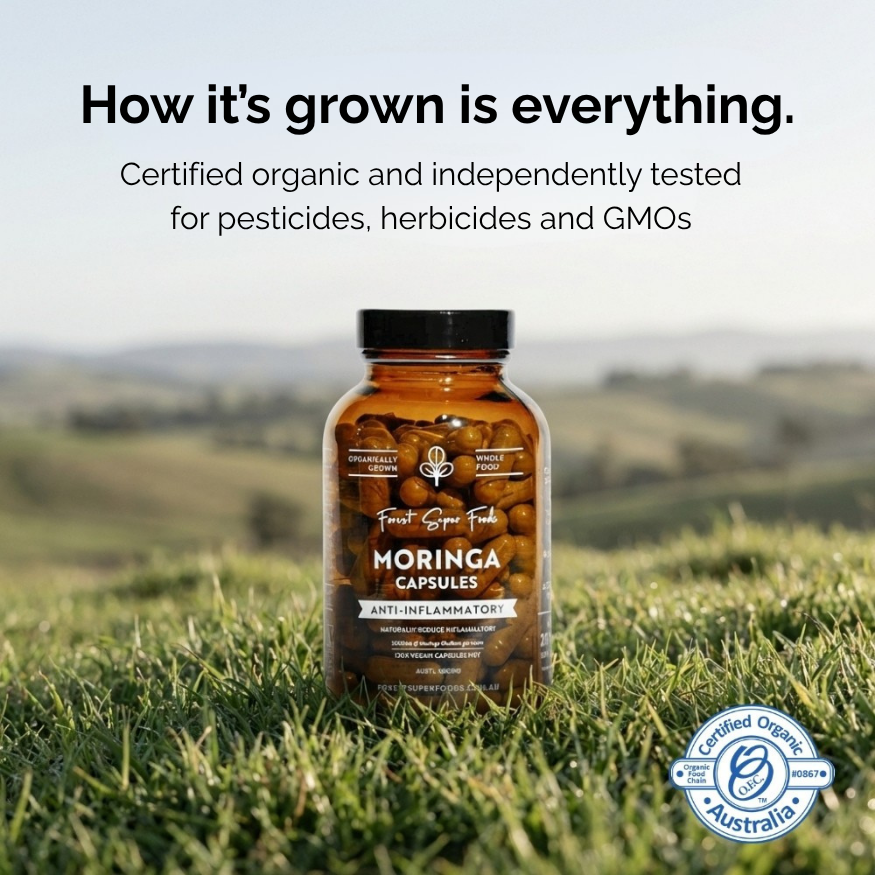
How is it grown and processed? Moringa begins as an agricultural crop, so quality starts well before the leaves reach a capsule. Growing conditions, harvest, handling and drying all influence the finished leaf material. Forest Super Foods moringa is organically grown in Tamil Nadu, freeze-dried, finely milled and encapsulated in Australia. Freeze-drying removes moisture at low temperature, helping create a stable whole-leaf powder for encapsulation.
The bottom line. Moringa is a traditional botanical with a distinctive whole-leaf nutritional profile. Forest Super Foods keeps the product simple: Moringa oleifera leaf, 500 mg per capsule, no bark or seed, and no isolated extract. The listed product is used for antioxidant activity and is traditionally used in Ayurvedic medicine to help relieve inflammation.
How is moringa regulated in Australia? Moringa has an unusual regulatory position in Australia. Moringa oleifera is not currently permitted for retail sale as a food or food ingredient following the FSANZ decision on Application A1294. Therapeutic products are regulated separately. Forest Super Foods Moringa Capsules are included in the Australian Register of Therapeutic Goods as AUST L 460360.
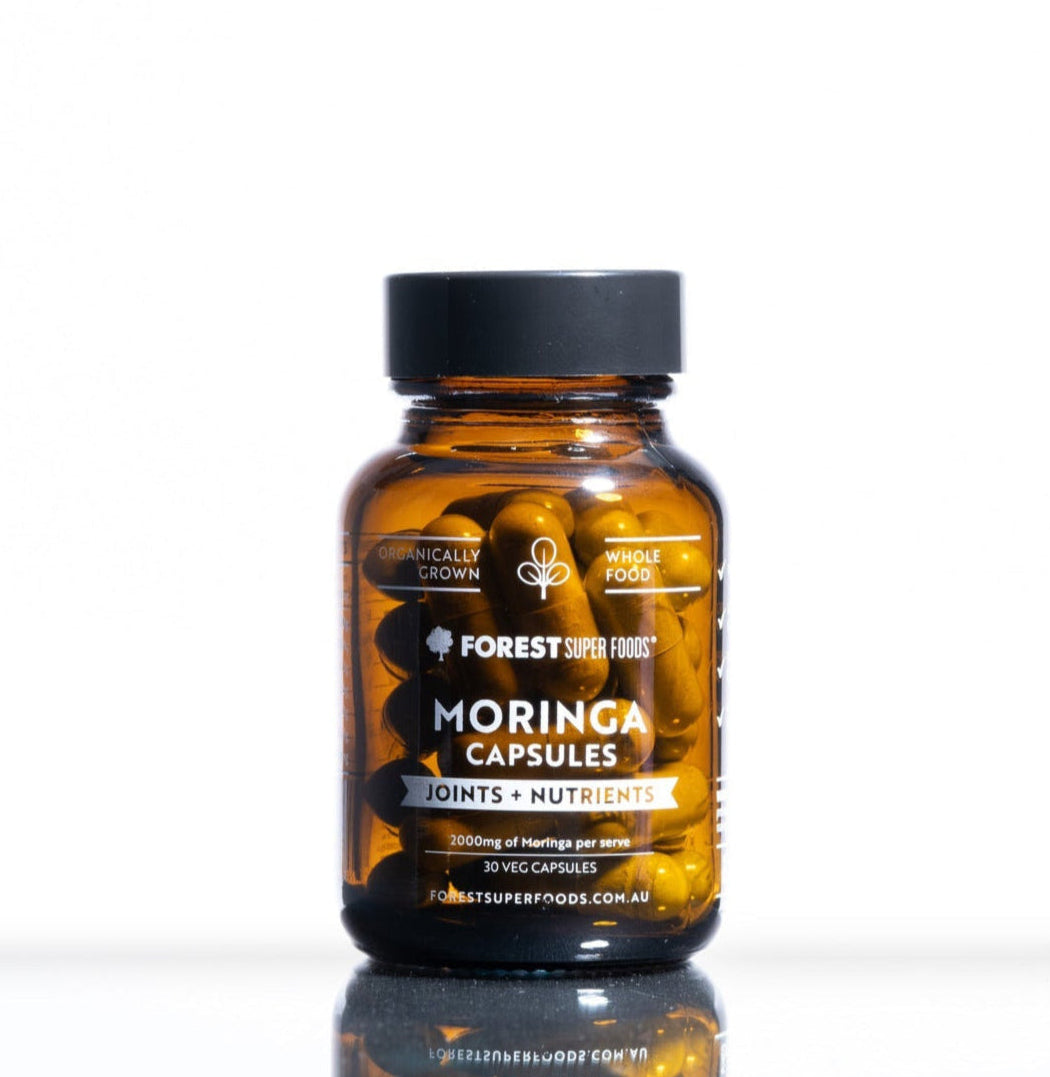
What is moringa?
Moringa is the common name most often used for Moringa oleifera, a leafy tree in the Moringaceae family. It grows quickly in warm climates and has small green leaflets, pale flowers and distinctive long seed pods.
The tree has a long history of use in the Indian subcontinent and is now cultivated across many tropical and subtropical regions. Forest Super Foods uses Moringa oleifera leaf only.
Shop the capsulesWhat Is Moringa?
Why is it called the drumstick tree or horseradish tree? Moringa has collected several common names over time. “Drumstick tree” refers to the long narrow pods. “Horseradish tree” refers to the pungent root, while “ben oil tree” refers to the oil traditionally pressed from its seeds. These names describe different parts of the same tree, which is why a supplement label should always tell you exactly which plant part it contains.
Where does it grow? Moringa oleifera is native to the Indian subcontinent but now grows throughout many parts of Asia, Africa, the Americas, the Caribbean and the Pacific. It generally prefers full sun, warmth and freely draining soil. Forest Super Foods currently sources its moringa leaf from Erode in Tamil Nadu, India.
Which parts of the tree are used? Leaves, pods, seeds and seed oil have all been used in different cultural and practical settings. Roots and bark also appear in traditional records, but they are different materials with different constituents. Forest Super Foods Moringa Capsules contain only the leaf, so the nutritional and traditional information on this hub is focused on Moringa oleifera leaf.
Why has moringa become popular? Moringa brings together several things people look for in a botanical: a long traditional history, a naturally complex whole-leaf composition and a simple plant-based format. Rather than treating moringa as a miracle ingredient, it is more useful to look at what is actually in the product, how it has been processed and the indications attached to the Australian listed medicine.
What form does Forest Super Foods sell? Forest Super Foods Moringa is a TGA-listed capsule medicine, AUST L 460360. Each capsule contains 500 mg of Moringa oleifera leaf powder in a plant-based hypromellose capsule. The leaf is organically grown, freeze-dried, finely milled and tested before encapsulation.
How is moringa different from a greens powder? A greens powder is usually a blend category. It can contain grasses, algae, vegetables, fruit powders, herbs or added nutrients. Moringa is one specific botanical species and, in the Forest Super Foods product, one specific plant part: the leaf. In Australia there is also an important regulatory difference. Moringa oleifera is not currently permitted for retail sale as a food ingredient, while Forest Super Foods Moringa is supplied as a listed medicine.
Moringa Nutrition Profile
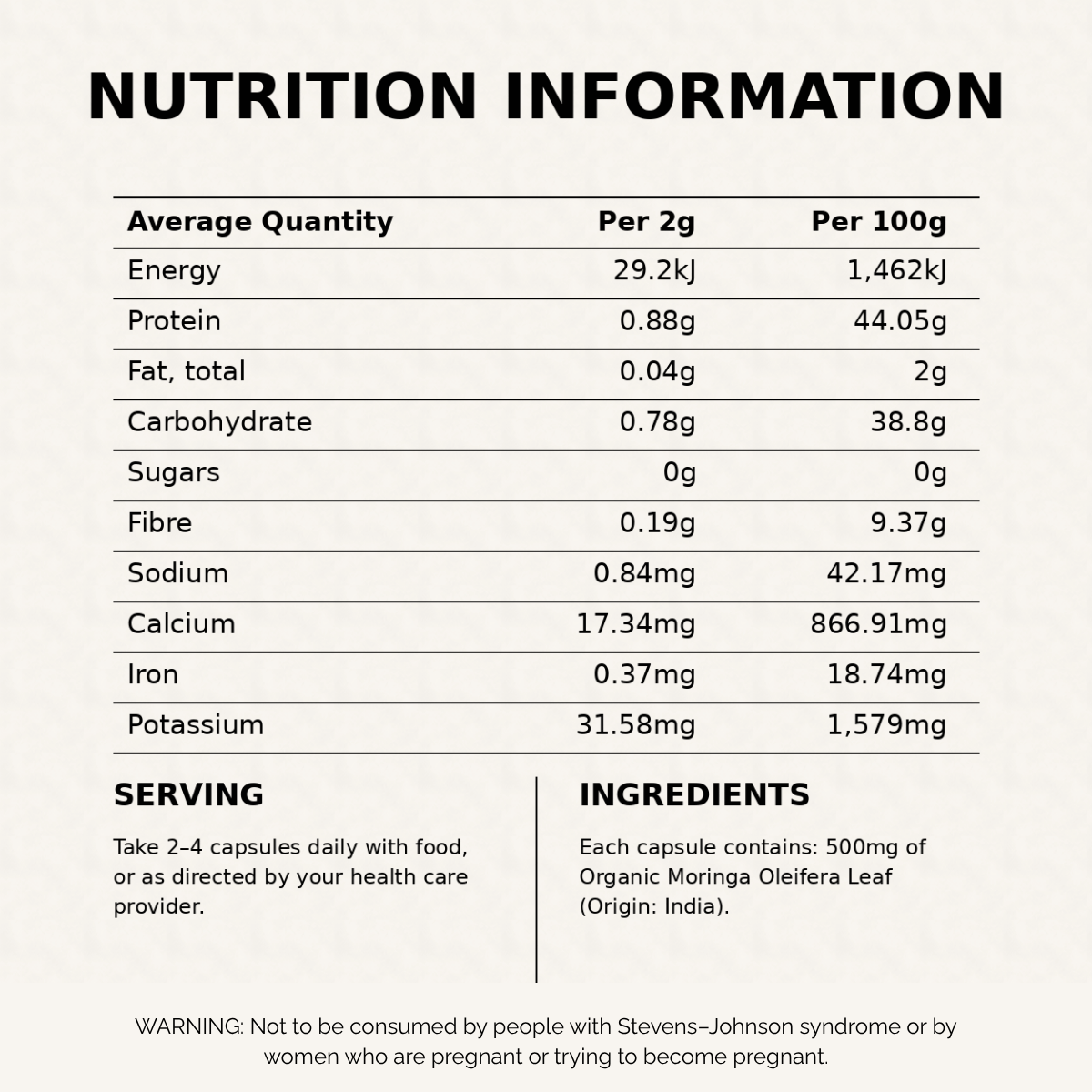
Moringa leaf has an unusually broad nutritional profile. Across Moringa oleifera, more than 90 nutritional chemical components have been described, spanning proteins, lipids, carbohydrates, dietary fibre, vitamins, minerals, amino acids and a wide range of naturally occurring plant compounds. At least 19 different amino acids, including essential and non-essential amino acids, have also been identified. Exact levels vary according to growing conditions, harvest, drying, processing and storage.
Dried leaf powder is more concentrated than fresh leaf because much of the water has been removed. That makes per-100 g values useful for understanding the plant, but the amount delivered by a capsule is much smaller.
What did Forest Super Foods’ batch test report? Forest Super Foods has product-specific batch testing for its moringa powder. The supplied 2025 analysis reported, per 100 g of tested powder, 22.3 g protein, 7.9 g fat, 51.6 g carbohydrate, 12.1 g total sugars, 12.8 g ash and 1,550 kJ of energy. Those figures belong to the tested batch and are useful for understanding the raw material. They should not be read as the amount supplied by one capsule.
What does that mean per capsule? Each Forest Super Foods Moringa capsule contains 500 mg of leaf powder. Using the 2025 batch analysis as a simple proportional example, one 500 mg capsule would contain only a small fraction of the per-100 g values. That is why it is better to describe moringa as a whole-leaf botanical with naturally occurring nutrients rather than treat a capsule as a multivitamin or protein supplement.
Moringa’s nutritional interest comes from this broad whole-plant matrix rather than any single nutrient. The “more than 90” figure describes nutritional chemical components identified across Moringa oleifera and should not be interpreted as 90 nutrients present at meaningful amounts in every capsule.
Macronutrients
Protein, carbohydrate, dietary fibre and naturally occurring fats, including omega-3 and omega-6 fatty acids.
Vitamins
Provitamin A carotenoids, vitamin B1 (thiamine), vitamin B2 (riboflavin), vitamin B3 (niacin), vitamin B6, folate (vitamin B9), vitamin C and vitamin E (tocopherols).
Minerals
Calcium, magnesium, phosphorus, potassium, iron, zinc, copper, manganese, sodium, sulphur and boron.
Amino acids and phytonutrients
Essential and non-essential amino acids, carotenoids, phenolic acids, flavonoids, glucosinolates, sterols, terpenes, tannins, saponins, glycosides and polysaccharides.
Why nutrition figures vary
Does moringa contain all nine essential amino acids? Moringa leaf protein contains a broad amino acid profile, including essential amino acids. This is nutritionally interesting, but serving size still matters. A capsule contains 500 mg of whole leaf, so Forest Super Foods Moringa should not be positioned as a replacement for dietary protein.
How does processing affect nutrition? Fresh leaves contain a high proportion of water. Drying creates a more stable plant material, but the method used can influence heat- and oxygen-sensitive compounds. Forest Super Foods uses freeze-drying, a low-temperature process that removes water from frozen plant material before the leaf is finely milled and encapsulated.
Moringa is an agricultural plant, so its composition is not identical everywhere. Soil, climate, variety, leaf maturity, harvest timing, drying method, storage and laboratory method can all influence the numbers reported. For exact information about the Forest Super Foods product, current batch testing is more relevant than a generic value found online.
Published sources: PMID 35454694, PMC9916933, PMC11479159, PMID 37111230.
Moringa Health Benefits: What the Evidence Says
Forest Super Foods Moringa has two key indications. It has antioxidant activity and helps reduce free radicals formed in the body. It is also traditionally used in Ayurvedic medicine to help relieve inflammation. These indications give a clear, practical picture of what the product is intended for without turning moringa into a treatment for unrelated conditions.
What does antioxidant mean? Free radicals are reactive molecules produced as part of normal metabolism and through everyday environmental exposure. The body has its own antioxidant defence systems, and plants also contain naturally occurring antioxidant compounds. Forest Super Foods Moringa is listed for antioxidant activity and helping reduce free radicals formed in the body.
What can we say about inflammation? Moringa has a long place in Ayurvedic medicine. For Forest Super Foods Moringa, the relevant traditional indication is that it is traditionally used in Ayurvedic medicine to help relieve inflammation. The words “traditionally used in Ayurvedic medicine” are important because they describe the basis of the indication.
What about broader claims? Moringa is often discussed online alongside a very wide range of health concerns. A long list of claims can make it difficult to know what actually applies to a particular product. For Forest Super Foods Moringa, keep it simple: antioxidant activity and traditional Ayurvedic use to help relieve inflammation are the relevant listed indications.
Can moringa treat diabetes, high cholesterol or high blood pressure? Forest Super Foods Moringa is not positioned as a treatment for diabetes, high cholesterol or high blood pressure. People managing these conditions should continue to follow the treatment plan recommended by their health professional. If you take prescription medicines, check suitability before adding a new botanical supplement.
Does moringa support energy, immunity, skin, hair or hormones? Those are common wellness themes attached to many botanicals, but they are not the core listed indications for Forest Super Foods Moringa. If your goal is antioxidant support or you are looking for a moringa product traditionally used in Ayurvedic medicine to help relieve inflammation, the Forest product has a clear purpose.
How should you think about claims online? Look for specificity. Does the information identify the plant part? Is it talking about a food, an extract or a whole-leaf capsule? Does the claim match the product being sold? A good moringa product does not need a long list of dramatic promises. Clear ingredients, transparent processing, quality testing and appropriate indications tell you much more.
Why does the type of evidence matter? Traditional use and modern product indications are different ways of describing a botanical. Forest Super Foods makes the traditional basis explicit when discussing inflammation and uses the listed antioxidant indication separately.
Moringa vs Spirulina, Wheatgrass and Matcha
Moringa, spirulina, wheatgrass and matcha are not the same kind of product. Moringa is the leaf of a tree, spirulina is a cyanobacterium commonly sold as a blue-green powder, wheatgrass is the young grass of wheat, and matcha is finely milled green tea leaf. They differ in origin, taste, caffeine, typical serving size and the way they are used.
Matcha is usually prepared as a tea or latte. Spirulina and wheatgrass are commonly sold as food powders, tablets or ingredients in greens blends. Forest Super Foods Moringa is different in Australia because it is supplied as a TGA-listed capsule medicine rather than a retail food ingredient.
Matcha naturally contains caffeine because it comes from the tea plant, Camellia sinensis. Moringa leaf, spirulina and wheatgrass are not naturally used as caffeine sources.
Which has the most protein or micronutrients depends on the exact product and the amount consumed. Spirulina is known for a high protein percentage by dry weight, while moringa leaf contains protein, fibre, vitamins, minerals and plant compounds. Wheatgrass and matcha have their own distinct nutritional profiles. Per-100 g comparisons can be misleading when normal serves are very different. Compare the labelled serving amount of the actual products you are considering.
Each ingredient has a different history and product category, so there is little value in declaring one universally “best”. For Forest Super Foods Moringa, the relevant listed uses are antioxidant activity and traditional Ayurvedic use to help relieve inflammation. Other products should be judged by their own ingredients, labels and intended use.
A practical decision framework. First, decide whether you want a beverage, food powder or capsule medicine. Second, compare the actual serving sizes and ingredient lists. Third, consider caffeine, medicines, pregnancy and individual sensitivities. Finally, look at sourcing, processing and quality testing. That approach is more useful than choosing solely because one plant contains more of a nutrient per 100 g.
Choose based on what you actually want from the product. Quality, personal suitability and the form of the product matter more than a generic superfood ranking.
Moringa capsules
A listed whole-leaf capsule for antioxidant activity and traditional Ayurvedic use to help relieve inflammation. 500 mg leaf, AUST L 460360.
Australian Spirulina
A food-based cyanobacterium powder. Useful if you want a greens ingredient rather than a listed capsule medicine.
Organic Wheatgrass
Young wheat grass as a food powder. Compare labelled serving size rather than per-100 g tables.
Organic Matcha
Powdered green tea from Camellia sinensis. The option if you want a caffeinated tea ritual.
How to Take Moringa Capsules Safely
Use Forest Super Foods Moringa exactly as directed on the current bottle label. The product is supplied in Australia as a TGA-listed medicine, AUST L 460360. Swallow the capsules as directed and do not exceed the labelled amount. Always read the label and follow the directions for use.
How many capsules? Each capsule contains 500 mg of Moringa oleifera leaf powder. The number of capsules to take should come from the current bottle directions, as the label is the source of truth for dosage. Do not copy doses from overseas products or online discussions because capsule strength and directions can differ.
What time of day? There is no need to create a complicated timing routine unless the label gives a specific instruction. Choose a time that makes it easy to take the product consistently and according to the directions. If you are sensitive to supplements, pay attention to how you feel and keep your routine simple when introducing something new.
Should you start lower? When starting any new food or supplement, it can be sensible to begin with a lower amount and increase gradually as tolerated, while still following the current label directions. If you are unsure whether the product is suitable for you because of medicines, a medical condition or a history of reactions to foods or supplements, check with a health professional before starting.
Can capsules be opened into food or drinks? Forest Super Foods Moringa is supplied as a capsule medicine in Australia. Use it in the form and manner directed on the label rather than opening the capsules into food or drinks. If you have difficulty swallowing capsules, contact Forest Super Foods or a pharmacist for product-specific guidance.
What should you check before the first dose? Read the active ingredient, directions, warnings, expiry and storage instructions. Check that you have not recently started several new supplements at once, as this can make it harder to identify the cause of an unexpected reaction. Do not use Forest Super Foods Moringa if you have Stevens-Johnson syndrome, or if you are pregnant or trying to become pregnant.
How long should you take it? Follow the label and consider whether the reason you started taking the product is still relevant. If symptoms persist, talk to your health professional. A supplement should not be used to delay assessment of new, unexplained or persistent symptoms.
How do you build a safe routine? Keep an up-to-date list of your medicines and supplements, use products at their labelled dose and store them as directed. Introducing one new product at a time can also make it easier to understand your own tolerance. Re-check suitability if you become pregnant, start a new medicine, prepare for surgery or develop a new health condition.
Suitability depends on the person using the product, the plant part, the dose and any medicines or health conditions that may be relevant. Read the label before use rather than assuming that a botanical is suitable for everyone simply because it comes from a plant.
Who should not take it
Do not take Forest Super Foods Moringa if you have Stevens-Johnson syndrome, or if you are pregnant or trying to become pregnant.
Possible side effects
Some people may experience digestive discomfort, including nausea, abdominal discomfort or changes in bowel movements. Stop if you experience an unexpected reaction.
Seek urgent help
Seek urgent medical attention for signs of a severe allergic or skin reaction, difficulty breathing, swelling, fainting or a rapidly worsening reaction.
Safety detail
Can moringa interact with medicines? Botanical products can contain many naturally occurring compounds, so medicine interactions need to be considered in the context of the individual and the medicines being used. If you take prescription medicines, particularly medicines that require close monitoring, check with a pharmacist or doctor before adding moringa. Do not change or stop prescribed treatment because of a supplement.
Does product quality affect safety? Yes. Correct botanical identity, microbial quality, heavy metals, storage and manufacturing controls all matter with plant materials. Forest Super Foods uses botanical identity testing and contaminant testing and provides batch quality information for its moringa.
What should you do before and during use? Read the label, follow the directions, check the expiry date and store the product correctly. If you are introducing moringa, avoid changing several other supplements at the same time where possible. If you experience a reaction, stop the product and keep the bottle or batch details available so the product can be identified accurately.
Can moringa replace medical treatment? No. Forest Super Foods Moringa is not a substitute for prescribed medicines, medical diagnosis or treatment. If symptoms persist, talk to your health professional.
What if you are unsure? When you are unsure, use the bottle label as the starting point and take the product details with you when asking a pharmacist or doctor. The botanical name, plant part, amount per capsule and AUST L number make it much easier to assess suitability than the word “moringa” alone. If you are breastfeeding, take prescription medicines, are preparing for surgery or have a medical condition, check suitability with a health professional before use.
History and Traditional Use of Moringa
Moringa oleifera is native to the Indian subcontinent. Over generations it was cultivated more widely throughout warm regions because the tree grows quickly and provides several useful plant parts. Today it is found throughout parts of Asia, Africa, the Americas, the Caribbean and the Pacific.
Why did moringa travel so widely? The moringa tree is well suited to warm climates and can tolerate seasonal dry conditions once established. Leaves, pods and seeds also had practical value, which encouraged cultivation beyond its original range. Its modern popularity is only one chapter in a much longer agricultural and cultural history.
How has moringa been used in Ayurveda? Ayurveda is a traditional system of medicine originating in the Indian subcontinent. Moringa has a place within this tradition, with different plant parts used in different preparations. Forest Super Foods Moringa carries the traditional indication: traditionally used in Ayurvedic medicine to help relieve inflammation.
How has it been used as food in other countries? In countries with an established history of food use, fresh moringa leaves and immature pods have been incorporated into traditional dishes. Australia treats moringa differently. Moringa oleifera is not currently permitted for retail sale as a food or food ingredient here, so Forest Super Foods supplies it as a listed capsule medicine.
What do the common names tell us? “Drumstick tree” refers to the long pods, “ben oil tree” to oil pressed from the seeds and “horseradish tree” to the pungent root. These names are reminders that moringa is a whole tree with many different plant parts. Forest Super Foods uses the leaf only.
How did moringa become a modern supplement? Interest in traditional botanicals and plant-based nutrition brought moringa into modern supplement formats, including powders, extracts and capsules. Forest Super Foods chose a whole-leaf format. Each capsule contains 500 mg of Moringa oleifera leaf powder.
How can traditional use be understood today? Traditional use tells us how a plant has been understood and used within a particular medical tradition. It is most meaningful when the tradition is named clearly rather than reduced to a vague claim about “ancient wisdom”. For Forest Super Foods, the Ayurvedic basis is stated directly wherever the traditional inflammation indication is used.
Traditional history and modern product information can sit comfortably together. The history explains where moringa comes from and how it has been used, while the label tells you exactly what is inside the current Australian product and how it should be taken. That gives the consumer both cultural context and practical information without blurring the two.
A useful sourcing story should tell you where the crop is grown, which plant part is used, how it is preserved, how it is tested and where the finished product is made.
1. Grown
Moringa oleifera prefers full sun and well-drained soil and can tolerate dry periods once established. Forest Super Foods currently sources organically grown leaf from Erode, Tamil Nadu, India. Leaf only — no bark, seed or fillers.
2. Harvested
Leaves are harvested once they have reached the required maturity. Fresh plant material still contains substantial moisture, so it must be handled efficiently and moved into a controlled preservation process.
3. Freeze-dried
Leaves are frozen, then water is removed under reduced pressure by sublimation. Because this happens at low product temperatures, freeze-drying is a gentle way to create a stable dried leaf. Never irradiated.
4. Milled, tested, encapsulated
Dried leaf is finely milled, fingerprint identity tested and checked for quality and contaminants. 500 mg goes into each plant-based hypromellose capsule at a TGA-registered facility in Australia.
What consumers should look for
Look for the full botanical name, the plant part, the amount per capsule, transparent sourcing, current certification, quality testing, clear warnings and an Australian listing number where the product is supplied as a therapeutic good. Forest Super Foods Moringa is labelled as Moringa oleifera leaf, 500 mg per capsule, AUST L 460360.
Current certificates of analysis and batch information give consumers a more useful picture than a generic statement that a product is simply “tested”. Fingerprint testing refers to analytical identity testing used to confirm that the botanical material matches the expected Moringa oleifera profile.
For Forest Super Foods, the story is straightforward: organically grown Moringa oleifera leaf from Erode, Tamil Nadu, freeze-dried, finely milled, quality tested and encapsulated in Australia.
Sources used for the nutrient section
Also see our creator claims guide and the Forest Super Foods story.

25+ years of experience as a clinician. Thousands of customers helped.
Still have a question? Can't find the answer you're looking for? Our Australian customer support team is here to help.
Moringa oleifera is not currently permitted for retail sale as a food or food ingredient in Australia. Forest Super Foods Moringa Capsules are supplied separately as a TGA-listed medicine, AUST L 460360.
The product has antioxidant activity and helps reduce free radicals formed in the body. It is also traditionally used in Ayurvedic medicine to help relieve inflammation.
Forest Super Foods Moringa is supplied in Australia as a listed capsule medicine. Use the capsules according to the bottle directions rather than as a food ingredient.
Do not use the product if you have Stevens-Johnson syndrome, or if you are pregnant or trying to become pregnant. Check the current bottle label for all warnings.
No. Moringa comes from Moringa oleifera, while matcha is powdered green tea from Camellia sinensis.
No. The product contains Moringa oleifera leaf powder only.
The current sourcing information identifies Erode, Tamil Nadu, India.
Published compositional sources identify protein, fibre, fats, B vitamins, folate, vitamins C and E, carotenoids, calcium, magnesium, phosphorus, potassium, iron, zinc, copper, manganese, sodium, sulphur, boron and a range of plant compounds.
No. Moringa leaf contains protein, but a 500 mg capsule provides only a small amount of total protein.
Moringa is a plant material. Growing conditions, harvest, drying, storage and testing methods all affect measured composition.
Yes. The full wording is traditionally used in Ayurvedic medicine to help relieve inflammation.
No. Forest Super Foods Moringa is not presented as a treatment for serious disease.
No. Moringa is a tree leaf. Spirulina is a cyanobacterium.
Moringa is not naturally used as a caffeine source. Matcha contains caffeine.
There is no universal winner. They are different ingredients with different uses, serving sizes and product categories.
Take Forest Super Foods Moringa only as directed on the current bottle label.
Follow the bottle directions. Do not automatically double the next dose.
Some people may experience digestive discomfort. Stop use and seek advice if symptoms are significant or persistent.
No. The current warning states that the product should not be consumed during pregnancy or while trying to become pregnant.
Stop if you develop an unexpected reaction. Seek urgent medical attention for signs of a severe reaction.
Moringa has a documented place in Ayurveda. Forest Super Foods Moringa is traditionally used in Ayurvedic medicine to help relieve inflammation.
Leaves and pods have a history of food use in some countries. Australian regulation is different and does not currently permit moringa as a retail food ingredient.
Yes. The current product information states that the moringa leaf is freeze-dried and never irradiated.
It refers to analytical identity testing used to confirm that the botanical material matches the expected Moringa oleifera profile.
Travel size, topical oil, or pair Moringa with another everyday Forest Super Foods product.
Mini Organic Moringa
The same whole-leaf formula in a travel-size bottle.
Youth Booster Moringa Oil
A topical moringa oil for moisturising and nourishing the skin.
About Forest Super Foods
Why we stay whole-food, Australian-made where we can, and quality obsessed.